Williams College | Garfield Passive House
Williams College | Garfield House is a 40-bed, suite-style residence hall comprising 16,500 square feet.
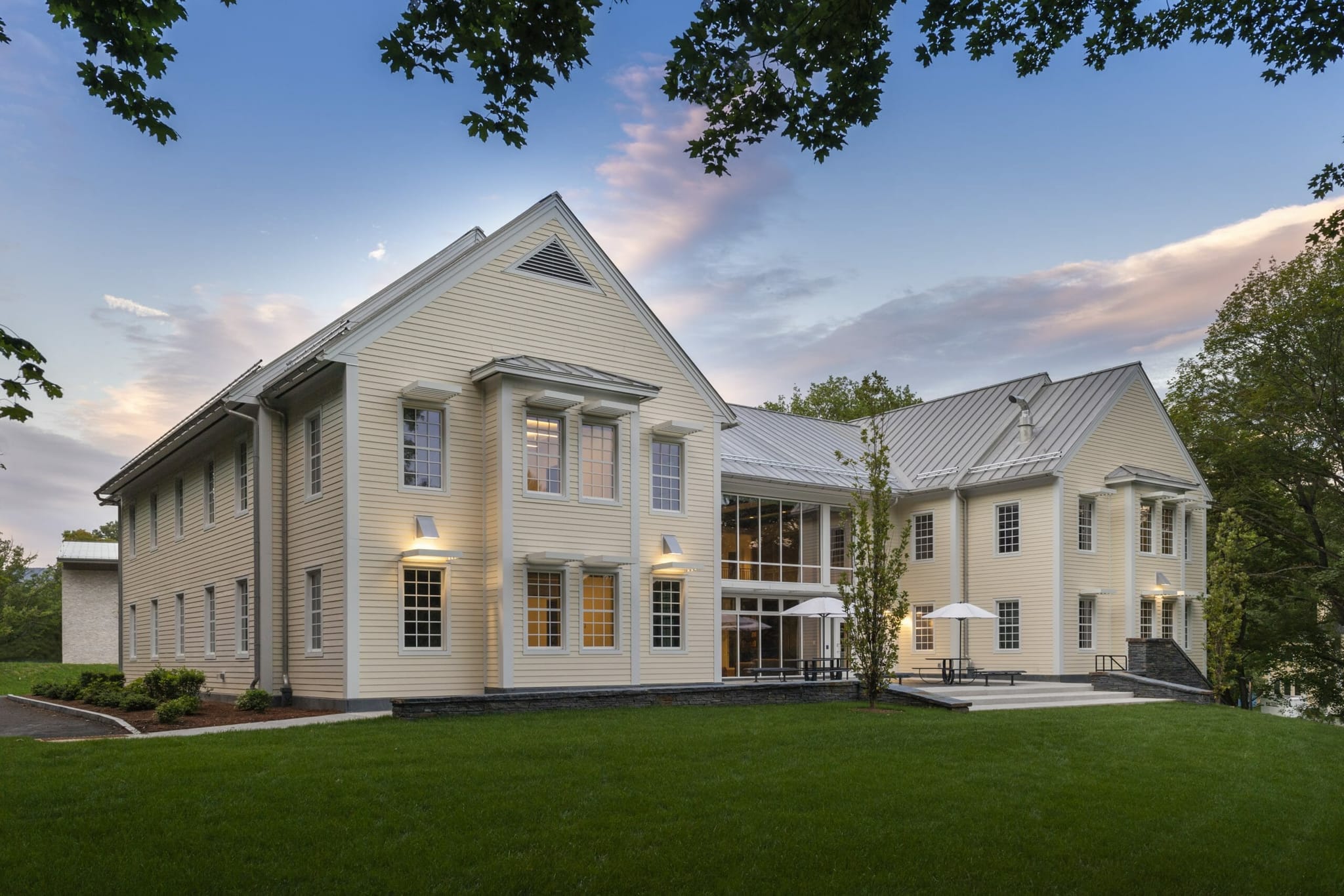
SGA designed Garfield House at Williams College, a 16,500-square-foot, 40-bed residence hall that sets a new benchmark for sustainable student housing. Among the first residence halls in Massachusetts to achieve the rigorous Passive House (PHIUS) certification, the building demonstrates how high-performance design can significantly reduce energy consumption while providing a comfortable, welcoming living environment. Thoughtfully integrated into the historic campus, the residence hall combines contextual architecture with advanced building technologies to support Williams College’s long-term sustainability goals.
Designed for first- and second-year students, Garfield House features suite-style accommodations complemented by shared amenities, including a central lounge, kitchen, billiard room, secure bicycle storage, and outdoor patio. The building’s design prioritizes occupant comfort, energy efficiency, and long-term operational performance while maintaining an architectural character that complements its surroundings.
At the heart of the project is a high-performance building envelope engineered to exceed stringent standards for airtightness and thermal efficiency. Enhanced wood framing, structural insulated panels, super-insulation, and triple-glazed windows minimize heat loss and energy demand. An all-electric approach incorporates energy recovery ventilation, radiant heating, passive ventilation, and phase-change materials for cooling, while a rooftop photovoltaic array further supports the building’s sustainability objectives.
With a targeted Energy Use Intensity (EUI) of just 28, Garfield House was designed to achieve 50–80% energy savings compared to conventional construction. Despite an estimated construction cost premium of approximately 2.5%, the project demonstrates the long-term value of investing in high-performance building systems. The result is a highly efficient, future-ready residential facility that balances student well-being, environmental responsibility, and operational cost savings, establishing a model for sustainable campus development.