How to Plan a New Residence Hall in Response to Generational, Environmental and Economic Trends
July 24, 2020
By: David Enriquez
When undertaking capital projects such as new residence halls, college and university administrators seek designs that meet specific institutional requirements. Any project must address not only the needs of current students, but also the future of the college campus — a future that may or may not be part of a master-planned vision.
One key consideration is the preferred living arrangements of students, who want security, equity in ethnic diversity and gender, a balance between private spaces that foster independence and larger spaces that encourage social mixing and bonding, and sustainability in the face of a changing climate. At the same time, administrations have to balance the desired student experience with the very real limitations of budgets and schedules, both of which must be optimized to fit within project constraints.
Competition for prospective students often requires that institutions prioritize the requirements of both parents and students. Generation Z, just now appearing on campus, is more socially, economically, and environmentally conscious than previous cohorts. As the priorities of subsequent generations change, the future of student housing should adjust accordingly. Gen Z students are coming of age in the midst of a climate crisis and a burgeoning recession fueled by a global pandemic while reckoning with issues of diversity and inequality. As a result, they are more equitable, sustainably-minded, frugal, and tech-reliant than students of the past. This shift in priorities will continue to shape a new kind of built environment on college campuses.
Several of SGA’s academic projects that we have planned and built within the last two years have addressed these emerging generational, environmental, and economic issues in a holistic way. We’ve sought solutions for multiple challenges with comprehensive building designs. Although each institution is different, SGA has observed several consistent themes:
- Single bedrooms: Historically, colleges have addressed bed shortages on campus by putting three students in a bedroom designed to house two. This inexpensive fix places the burden of the problem on students and leads to perceptions of inequity. Schools are electing to build a higher percentage of single bedrooms in their new residence halls to address student requests for more privacy and equity. With the COVID-19 crisis, single rooms are becoming the rule. Suites with contained bathrooms and kitchens provide the highest degree of safety from the hazards of group toilets and dining, where social distancing is not always possible.
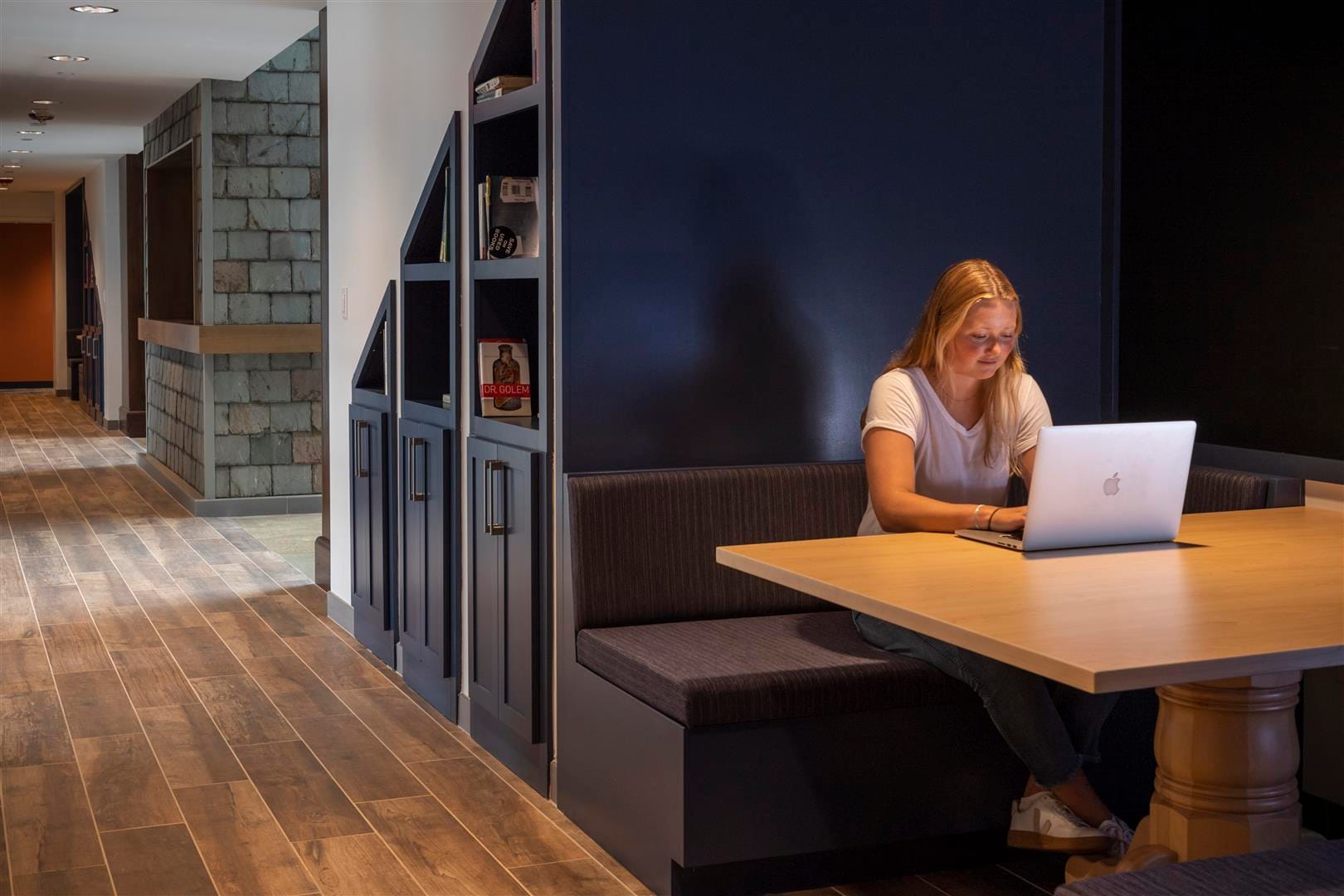
- Flexible amenity spaces: With a stronger emphasis placed on individual accommodation, amenity spaces that promote social bonding are even more critical. Building flexibility into these spaces helps ensure that they can be used by a variety of student groups throughout the day. In the new residence hall at Wheaton College, a common room is furnished in a way that enables small group study or dining during the day but has the necessary infrastructure for catered community events or other programs such as gaming competitions or movie nights.
- Technologically wired: Gen Z students don’t know a world without smart devices and high-speed internet. They depend on the ability to charge their phone from every seat and to stream video content in every room. We design residence halls to fulfill all the entertainment needs of students, but we also look to introduce spaces that enable seamless group study and virtual learning. Small “tech suites” throughout the buildings can provide easy ‘plug-and-play’ technology for students to easily connect and share content from their devices. With the COVID-era expansion of virtual learning and the participation of many students simultaneously from dorm rooms, we are expecting a need for expanded WiFi bandwidth.
- Reduced carbon footprint: Colleges and universities are in a powerful position when it comes to sustainability. As long-term owners and operators of their building stock, they steward the entire life of the building from concept to renovation or demolition, likely over multiple generations. As centers of scientific research, they can model their built environment to reflect the latest theory and practice in combating global climate change. As educators of the next generation, they can engage and inspire the best young thinkers of the future to creatively solve environmental problems. Intensively energy-efficient buildings like the SGA-designed Passive House residence halls at Wheaton College and Williams College address the exigency of the current climate crisis while reducing operating costs. Students living in these buildings learn that the character and design of their own living spaces can have a significant positive impact on their world. These practices also respond to and support over 600 colleges and universities that have signed up for the President’s Challenge to Reduce Carbon Emissions.
In the current crisis, many schools are choosing to ride out the uncertainty caused by COVID-19 by halting capital spending altogether and/or sending students to nearby hotels to promote single-room occupancy on a temporary basis. Although we expect the student residence hall to remain viable after this crisis, designers should be mindful of the societal shifts caused by the pandemic. Student housing and amenities may look very different when life on college campuses resumes as normal. Ever-evolving student priorities and unpredictable circumstances that could call for more or less bed capacity from year-to-year make flexibility paramount. Emerging generational shifts in the design of student housing design may already be part of the solution.
David Enriquez, RA, LEED AP BD+C is a Director, Architecture at SGA. He brings 20 years of experience in several different markets including high-rise residential, commercial and higher-education commissions including the first two Passive House student residence halls in Massachusetts.